

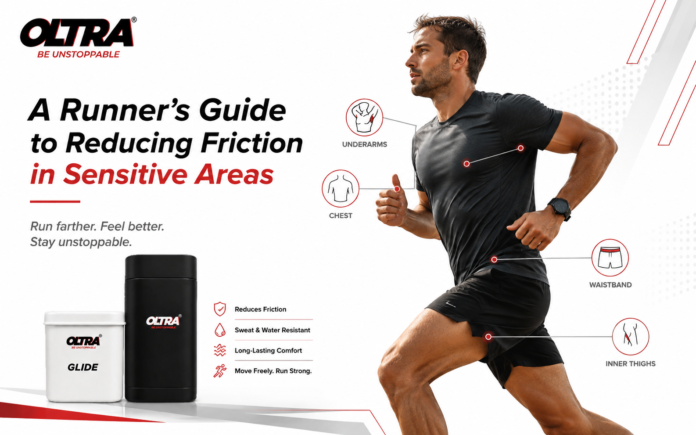

Runners spend considerable time thinking about shoes, pacing and recovery, yet skin friction can become equally disruptive during longer sessions. Areas such as the chest, inner thighs, waistband, groin and underarms experience thousands of repeated movements during a run.
Problems such as nipple chafing running may initially seem minor, but irritation can intensify rapidly once fabric becomes damp and continues rubbing.
Map Your Friction Points
Every runner has a slightly different combination of body shape, running clothing and movement pattern.
Instead of applying anti-chafe protection randomly, identify your personal hotspots.
After your next few runs, check:
- Chest
- Underarms
- Inner thighs
- Waistline
- Areas under sports bras
- Groin
- Feet
- Locations beneath belts or hydration packs
A nipple rub for runners may need a different prevention approach from thigh-to-thigh friction, so understanding location matters.
Consider What Is Causing the Contact
Friction generally comes from one of two sources: skin against skin or fabric/equipment against skin.
Skin-to-Skin Movement
Inner thighs are a common example. Repeated contact becomes more noticeable when perspiration increases.
Fabric-to-Skin Movement
Chest irritation, waistbands and pack straps fit into this category.
Equipment Can Create Unexpected Hotspots
Hydration vests, heart-rate straps and running belts can move slightly with every step. On a 90-minute run, that small movement adds up.
Adjust straps carefully and test equipment before using it for an important event.
Why Moisture Changes Everything
Sweat does more than make clothing feel damp. It can change how fabric sits against the skin and increase movement at particular contact points.
This is why nipple chafing running problems often appear during summer, races or long-distance training even if shorter sessions are comfortable.
Wet-weather running creates similar challenges because clothing may remain saturated for much longer.
Build a Barrier Before Exercise
Prevention should be proactive.
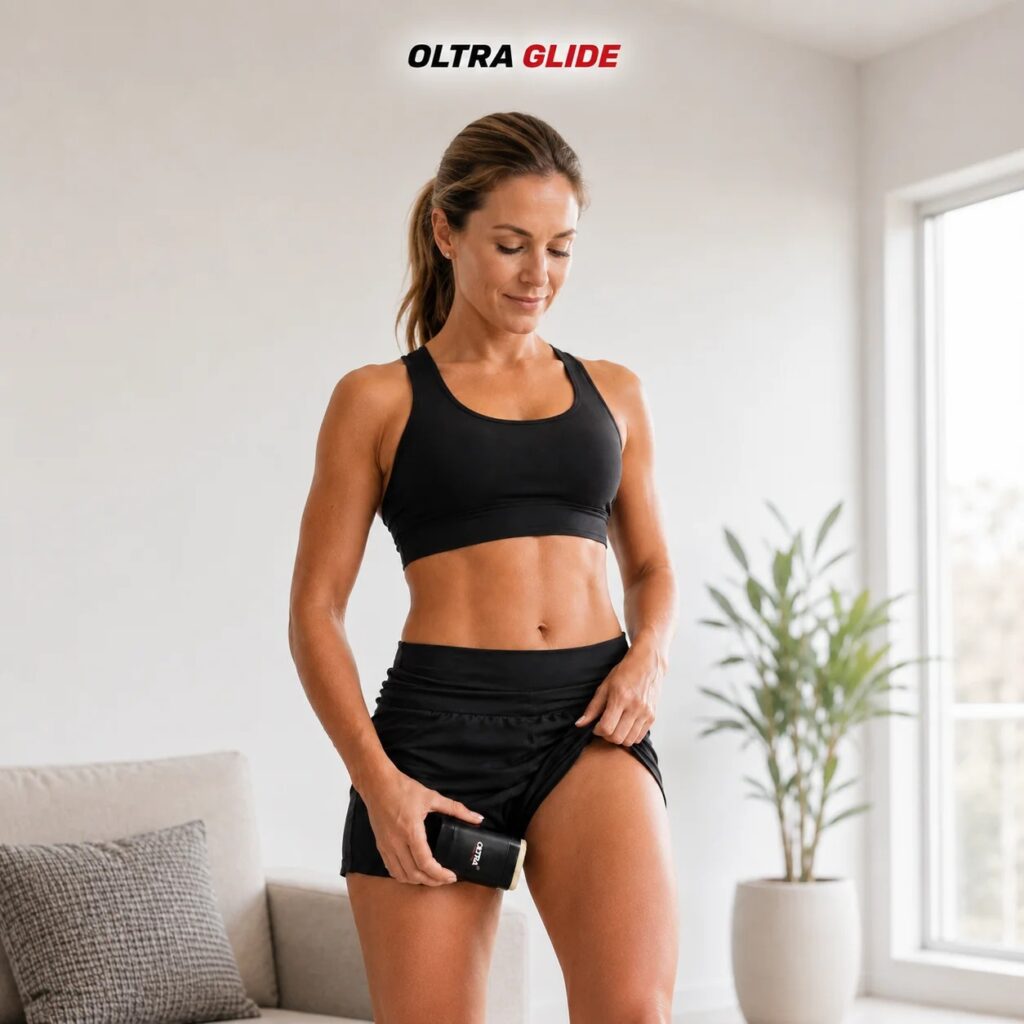
A product commonly described as a runners glide can be applied before activity to reduce direct friction at predictable hotspots.
Use it on clean, dry skin and concentrate on areas with a known history of rubbing rather than waiting for discomfort to begin.
Do Not Forget Less Obvious Areas
Runners frequently prepare their thighs but overlook:
- Waistband edges
- Shirt seams
- Underarm folds
- Sports bra edges
- Areas under a phone holder
- Pack contact points
An extra 30 seconds of preparation may prevent an hour of irritation.
Clothing Can Solve Part of the Problem
A nipple rub for runners is sometimes connected directly to shirt choice.
Try to determine whether the issue happens with every top or only certain garments. If one shirt consistently causes problems, reserve it for casual use rather than repeatedly trying to make it work for long training sessions.
Helpful clothing characteristics include:
- Smooth interior surfaces
- Minimal rough seams
- Stable fit
- Moisture-managing fabric
- Appropriate length
- No unnecessary movement
The objective is not simply tightness. Clothing should move naturally without constantly sliding across sensitive areas.
Treat Training as Testing
Long runs are useful opportunities to test more than fitness.
Use them to understand:
- Which garments remain comfortable after becoming wet.
- Where friction starts.
- How much product you prefer to apply.
- Whether reapplication is needed.
- Which equipment needs adjustment.
If nipple chafing running begins after approximately the same duration each week, that pattern provides useful information.
Race Day Should Feel Familiar
Race preparation is not the time to introduce a completely new shirt, running belt and anti-chafing routine at once.
Use combinations that have already worked together.
Respond to Early Irritation
Do not assume a warm or tender patch will disappear while you keep running.
Adjust clothing or equipment and add more protection where practical. For a nipple rub for runners, even a small change to shirt position may reduce contact temporarily.
Once home, remove damp clothing reasonably soon and clean the area gently.
Why Choose Us
Oltra Glide offers a straightforward method for applying anti-friction protection directly to areas where runners expect repeated contact. That makes it suitable for building a quick friction check into normal training preparation.
Rather than approaching skin comfort only after irritation develops, active people can protect familiar hotspots before movement begins.
About Us
Oltra focuses on practical products for movement, exercise and active daily routines. We understand that small issues such as repeated rubbing can have an outsized impact when activity continues for extended periods.
Our aim is to make friction protection simple enough to become a regular habit rather than something remembered only after an uncomfortable run.
Conclusion
Reducing friction involves understanding your own movement rather than following a one-size-fits-all checklist. Clothing, moisture, equipment and distance all influence which areas need attention.
A runners glide product, carefully selected clothing and consistent pre-run preparation can work together to protect sensitive areas and allow you to concentrate on the kilometres ahead.