


Walk down any lane in Tapovan or Laxman Jhula and you will see signboards for yoga schools almost everywhere you look. Having so much choice is wonderful, but it can also be overwhelming when you are trying to pick the one place where you will spend several intense weeks. Choosing well is the single biggest factor in how much you gain from a yoga teacher training in Rishikesh, so here are ten practical things worth checking before you pay a deposit.
Credentials and Teaching Quality
1. Yoga Alliance registration. Confirm the school is a Registered Yoga School for the level you want. You can verify this directly on the Yoga Alliance directory rather than relying on a logo on a website. This is something authentic yoga training in India tends to offer more naturally than courses elsewhere.
2. Government recognition. Some schools also hold recognition from India’s Ministry of Ayush, which adds another layer of credibility.
3. Teacher experience. Ask who will actually teach your course, how long they have practised and what their own training was. Lead teachers should be named and accessible. If you are new to teaching, a 200 hour yoga teacher training in Rishikesh is usually the most sensible place to begin.
4. Class size. Smaller groups mean more individual attention, especially in alignment and practice teaching sessions.
The Curriculum Itself
5. A clear, written syllabus. A good school can tell you exactly how many hours go to asana, philosophy, anatomy, pranayama, meditation and teaching methodology. Vague descriptions are a warning sign.
6. Practice teaching. Make sure you will teach real classes during the course and receive structured feedback. This is where confidence is built.
7. Balance of tradition and modern knowledge. The best programmes combine classical texts with an up-to-date understanding of anatomy and safe alignment.
Daily Life and Environment
8. Accommodation and food. You will eat and sleep at or near the school for weeks. Ask about room types, cleanliness and whether meals are sattvic and suited to the training schedule.
9. Location. Quieter areas such as Upper Tapovan offer calmer surroundings and easier access to nature, while busier areas put you closer to cafes and markets. Think about which suits you.
Honesty and Reviews
10. Transparent communication and genuine reviews. Read reviews across several platforms and look for detailed, balanced feedback rather than short generic praise. Notice how quickly and clearly the school answers your questions before you book; that is often how they will treat you during the course.
Putting It All Together
You will rarely find a school that is perfect on every point, so decide which factors matter most to you. A useful exercise is to shortlist three schools and compare them side by side using the checks above.
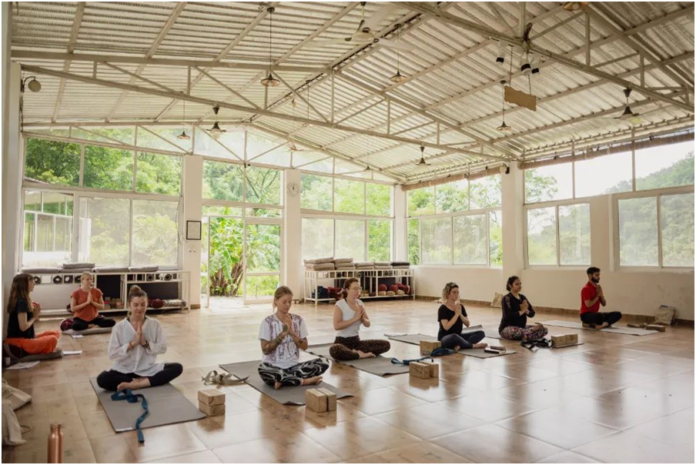
For example, Adhiroha Yoga School in Upper Tapovan is registered with Yoga Alliance at the 200, 300 and 500 hour levels and recognised by the Ministry of Ayush, has hosted students from more than 70 countries, and offers a forest-view shala and sattvic meals. Comparing a school like that against your other options, using its published course details for yoga teacher training in Rishikesh, is a good way to see how your shortlist measures up.
Once the practical checks are done, give some weight to how a school makes you feel. Clear answers, patient communication and a sense of genuine care are good signs. If anything feels rushed or unclear before you have even booked, take that seriously. With careful research and a little intuition, you can choose a school that supports both your learning and your well-being.