

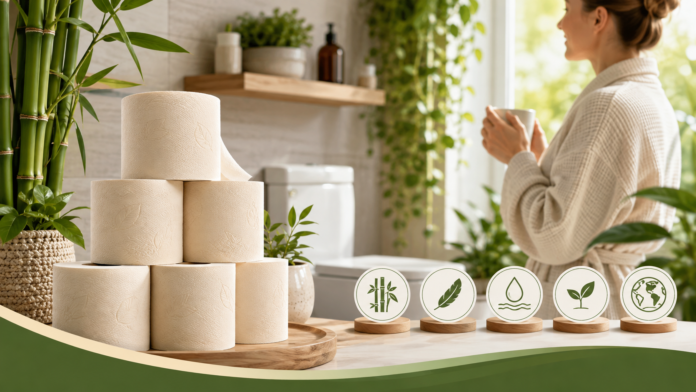

There is a small but telling shift happening in bathrooms across the country. Shoppers who once tossed the cheapest multipack into their cart without a second thought are now reading labels, asking where the pulp comes from, and, increasingly, signing up to have their supply delivered automatically. The product at the center of this shift is unglamorous but essential: toilet paper. The material drawing the most attention is bamboo.
The Environmental Math Behind the Switch
Conventional toilet paper has a bigger footprint than most people realize. According to industry research compiled by sustainability outlet The Roundup:
- Conventional toilet paper production contributes to the loss of more than 27,000 trees a day worldwide.
- The World Wildlife Fund projects that global wood harvesting could triple by 2050 if consumption trends hold.
- More than 28 million acres of Canadian boreal forest, an area roughly the size of Pennsylvania, were cleared between 1996 and 2019, much of it feeding pulp and paper mills.
For a product used once and flushed away, that math has started to look increasingly hard to justify.
Why Bamboo Is a Different Equation
Bamboo is technically a grass, not a tree, and that distinction matters. A few facts explain why it has become the go-to alternative:
- It can add several feet of height in a single day and reach full maturity in one to five years, compared with 30-plus years for hardwood trees.
- It regenerates from its own root system, so a grove can be harvested repeatedly without the erosion and habitat loss tied to clear-cutting forests.
- It can yield roughly 20 times more usable timber per hectare than trees.
- In optimal growing conditions, it absorbs significant volumes of carbon dioxide from the atmosphere as it grows.
For a paper industry under pressure to shrink its footprint, those numbers make bamboo toilet paper an easy substitute for virgin tree pulp.
It’s Not Just About Sustainability
The environmental case is only part of what is drawing households to switch. Texture and ingredients matter just as much:
- Bamboo fiber is naturally soft and strong, which lets it compete with (and often outperform) traditional paper without synthetic softeners.
- Organic Bamboo Toilet Paper is typically free of chlorine bleach, dyes, fragrances, and BPA, ingredients that are drawing more scrutiny from consumers.
- Bamboo requires little to no pesticide or fertilizer to grow, which appeals to buyers already rethinking their cleaning products, skincare, and food packaging.
Subscriptions Are Changing How People Buy It
Convenience has turned out to be just as important as sustainability. Toilet paper is an odd category for retail: it’s bulky, it’s needed regularly, and running out is never a minor inconvenience.
That combination has made subscription delivery one of the fastest-growing parts of the eco-friendly paper market. Instead of repeat store trips or stockpiling multipacks in a closet, more households now rely on a bamboo toilet paper subscription that ships a fresh supply on a set schedule, sized to how quickly a household actually goes through it. The model mirrors what has already happened with razors, coffee, and pet food: everyday essentials reimagined as something that simply shows up before anyone has to think about it.
Brands are also extending sustainability past the roll itself, positioning bamboo bathroom paper as part of a broader plastic-reduction effort. Many now wrap rolls in paper instead of plastic film and ship boxes free of single-use packaging, addressing a long-standing criticism of the eco-paper category: that “sustainable” toilet paper often still arrived wrapped in the same plastic it was meant to help people avoid.
Companies such as Wholeroll have built their offering around that detail, selling an organic bathroom tissue that’s plastic-free and delivered through a recurring bamboo bathroom paper subscription, so the sustainability claim extends to packaging and delivery, not just the fiber inside the roll.
A Few Caveats Worth Knowing
Not every claim in the bamboo paper aisle holds up equally well. Reporting from outlets including The Columbian and ABC News has noted that the environmental benefits of any “eco-friendly” toilet paper depend heavily on how it’s farmed, processed, and shipped. Bamboo grown with heavy fertilizer use or transported long distances can lose some of its advantage over recycled paper alternatives.
Shoppers looking to make an informed switch are increasingly advised to:
- Check for third-party certifications.
- Ask whether a brand discloses its bleaching process.
- Consider how the packaging is handled, not just what the roll itself is made of.
The Bottom Line
Bamboo toilet paper has moved from a niche eco-store item to a mainstream household staple, and the trend shows no sign of slowing. As deforestation concerns mount and shoppers grow more comfortable with subscription-based essentials, what started as a workaround for environmentally conscious buyers now looks like where the whole category is headed. For households weighing the switch, the questions worth asking are simple: where does the fiber come from, what’s it bleached with, and how does it arrive at the door.