

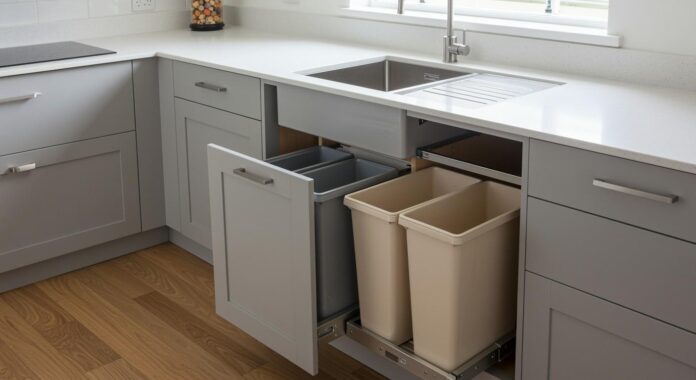

The kitchen is often described as the heart of the home, but it is also the hub of household waste. For years, the standard solution was a bulky, free-standing plastic container that inevitably clashed with sleek cabinetry and occupied valuable floor space. As we move through 2026, the shift toward minimalist, high-performance design has turned kitchen bins from an afterthought into a strategic design element. Homeowners are now opting for integrated systems that disappear behind cupboard doors, proving that the most efficient way to manage waste is to keep it out of sight and perfectly organized.
The Benefits of Switching to a Pull Out Bin
The move toward integrated waste systems isn’t just about aesthetics; it is about ergonomics and hygiene. A traditional floor bin requires you to manually lift a lid or step on a pedal, often leaving the waste exposed to the air. In contrast, a modern pull out bin is mounted on high-quality runners, allowing it to glide out from under the counter with minimal effort.
This setup offers several functional advantages:
- Space Optimization: By utilizing the “dead space” under the sink or in a narrow cabinet, you free up floor area for better movement.
- Odor Control: Many integrated systems feature close-fitting lids that remain inside the cabinet, creating a double barrier against smells.
- Ease of Use: With full-extension runners, you can access the entire bin capacity without awkward reaching, making bag changes a five-second task.
Sustainability and the “Three-Bin” Revolution
Global awareness regarding waste separation has reached an all-time high. According to Entrepreneur, sustainable home innovation is a primary driver of property value in 2026, as buyers look for “future-proofed” kitchens that make recycling effortless. Instead of a single large bucket, modern pull out bin configurations often feature dual or triple compartments.
This allows you to separate general waste, co-mingled recycling, and organic compost at the point of disposal. By having a dedicated spot for each stream right under your meal-prep area, the cognitive friction of recycling is removed, leading to much higher diversion rates from landfills.
Choosing the Right Hardware for Your Cabinetry
When selecting new kitchen bins, the “one size fits all” approach rarely works. You must consider the internal dimensions of your carcass, specifically the width and depth. High-end models now feature “soft-close” technology, ensuring the unit slides back into the cabinet silently without slamming against the back panel.
Materials also play a vital role. Look for bins made from high-grade, recyclable polymers that are resistant to staining and easy to wipe down. If your kitchen sees heavy traffic, commercial-grade steel runners with a high weight-loading capacity are essential to prevent sagging over time.
Elevating Your Daily Workflow
The mark of a truly great kitchen is not just in the appliances you see, but in the systems you don’t. Transitioning to an integrated waste solution is an investment in your home’s daily flow, cleanliness, and environmental impact. By choosing quality hardware that matches your lifestyle, you turn a chore into a seamless part of your culinary routine. Ready to reclaim your floor space and streamline your recycling? Explore the latest range of integrated systems today and discover how the right storage can transform your kitchen’s functionality.